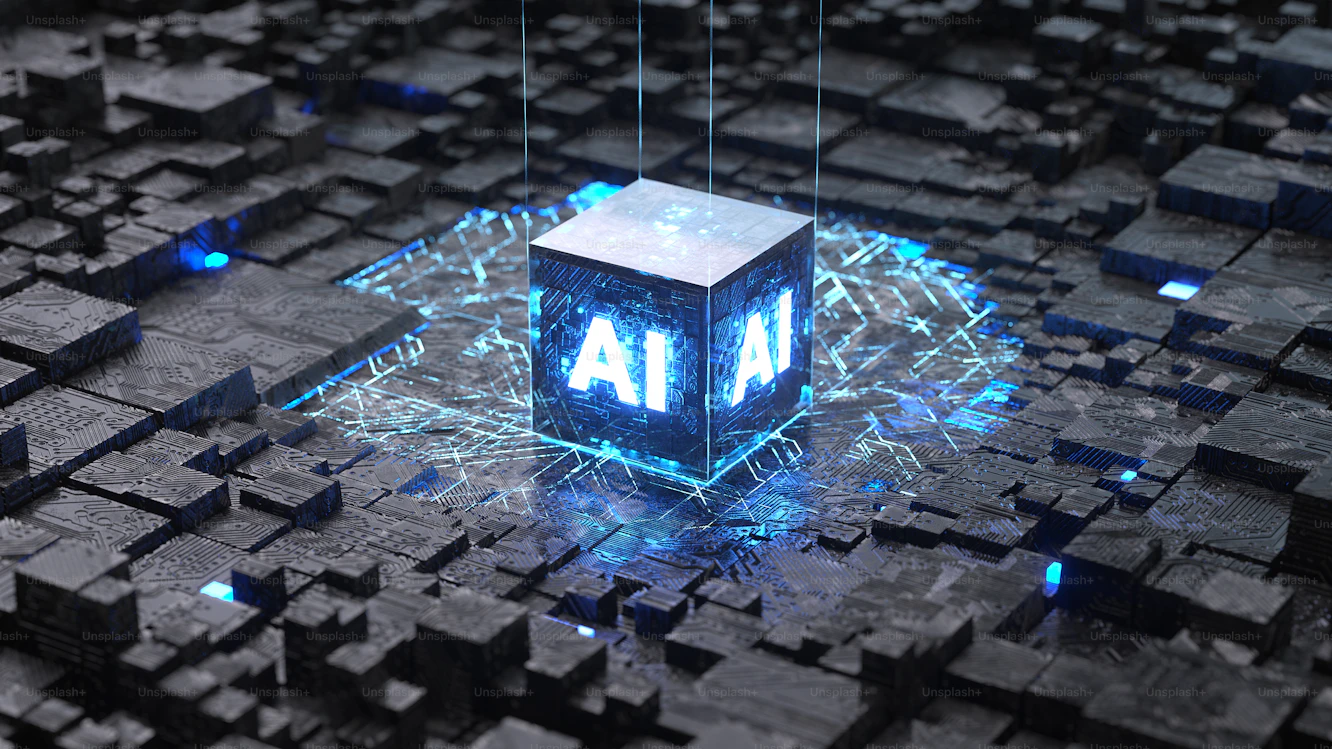
what is artificial intelligence
You have probably heard the term “artificial intelligence” thrown around a lot lately. It shows up in news headlines, tech product ads, and conversations at the dinner table. But what does it actually mean? And why should you care?
This guide breaks it all down in plain language. No confusing jargon. No fluff. Just real, useful information that actually helps you understand one of the most important technologies of our time.
So, What Is Artificial Intelligence?
Artificial intelligence, or AI, is the ability of a computer or machine to perform tasks that normally require human thinking. Things like understanding language, recognizing faces, making decisions, or learning from experience.
Think about how your phone recognizes your face to unlock. Or how Netflix suggests shows you actually want to watch. That is AI working quietly in the background.
At its core, AI is software that has been trained to think, recognize patterns, and respond in ways that feel intelligent. It does not actually “think” the way you do, but it can process massive amounts of data much faster than any human ever could.
A Quick History: Where Did AI Come From?
AI is not as new as people think. The idea has been around since the 1950s. Alan Turing, a British mathematician, was one of the first to ask the question: “Can machines think?”
From there, researchers spent decades building programs that could play chess, understand speech, and solve math problems. But real progress came much later, when computers got faster, and the internet gave us enormous amounts of data to train AI systems on.
Today, we are living in what experts call the AI boom. Tools like ChatGPT, Google Bard, and image generators have made AI accessible to ordinary people, not just scientists and engineers.
How Does AI Actually Work?
AI learns from data. Lots of it. Imagine showing a child thousands of pictures of cats and dogs until they can tell the two apart without help. AI training works similarly.
Here is a simplified breakdown of the main ideas:
Machine Learning
Machine learning is a type of AI where the system learns from examples rather than being told exact rules. You feed it data, it finds patterns, and over time, it gets better at making predictions.
Deep Learning
Deep learning goes a step further. It uses layers of algorithms (called neural networks) that mimic how the human brain processes information. This is what powers things like voice assistants and self-driving cars.
Natural Language Processing (NLP)
NLP is what lets AI understand and respond to human language. When you type a question into a chatbot, and it gives you a useful answer, NLP is doing that work.
Types of Artificial Intelligence
Not all AI is the same. Here are the three main types you will hear about:
- Narrow AI: This is AI designed for one specific task. Spam filters, voice assistants like Siri, and recommendation engines are all narrow AI. This is the only kind that actually exists today.
- General AI: This would be an AI that can do anything a human can do. It does not exist yet, but researchers are working toward it.
- Super AI: This is the science fiction version, a machine smarter than every human combined. It is purely theoretical at this point.
Right now, everything you use in daily life is narrow AI. And it is already pretty impressive.
Where Is AI Being Used Right Now?
AI is already woven into your everyday life, even if you do not notice it. Here are some real-world examples:
- Healthcare: AI helps doctors detect diseases like cancer from scans earlier and more accurately than before.
- Finance: Banks use AI to flag suspicious transactions and protect you from fraud.
- Education: AI-powered tools personalize learning based on each student’s pace and weak areas.
- Retail and eCommerce: Product recommendations on Amazon or Shopify are driven by AI studying your browsing habits.
- Customer Support: Chatbots handle millions of support questions every day, saving businesses time and money.
- Transportation: Google Maps uses AI to predict traffic and give you the fastest route.
Benefits of Artificial Intelligence
AI has real, measurable benefits that go beyond convenience:
- Speed: AI processes data in seconds that would take humans hours or even years.
- Accuracy: In many tasks, AI makes fewer mistakes than humans, especially in repetitive jobs like data entry or image scanning.
- Availability: AI works 24 hours a day, 7 days a week, without getting tired.
- Cost savings: Businesses save billions by automating tasks that once required large teams.
- Personalization: From music playlists to medical treatment plans, AI tailors experiences to the individual.
Risks and Concerns Around AI
AI is powerful, but it comes with real concerns that deserve honest attention:
- Job displacement: Automation may eliminate certain jobs, particularly in manufacturing, customer service, and data processing.
- Bias: AI systems can reflect the biases in the data they were trained on, leading to unfair outcomes in hiring, lending, or law enforcement.
- Privacy: AI-powered surveillance and data collection raise serious questions about how much of your life is being watched and stored.
- Misinformation: AI can generate realistic fake images, videos, and text that are hard to distinguish from real content.
These are not reasons to fear AI, but they are reasons to take it seriously. Responsible AI development matters, and conversations about regulation and ethics are growing louder around the world.
AI vs Human Intelligence: What Is the Difference?
People often worry that AI will “replace” human intelligence. That fear is understandable, but it misses something important.
AI is incredibly good at pattern recognition, repetitive processing, and handling large datasets. But it does not have emotions, common sense, creativity born from lived experience, or moral judgment. A doctor using AI still brings empathy and context to a patient that no machine can replicate.
The smarter framing is not AI vs humans. It is AI plus humans. The people who learn to work alongside AI will have a significant advantage in the years ahead.
The Future of AI: What Is Coming Next?
AI is developing at a speed that is hard to keep up with. Here are some directions researchers and companies are actively pursuing:
- More powerful language models that understand context, nuance, and reasoning at a deeper level.
- AI in drug discovery, potentially shortening the time it takes to develop new medicines from decades to years.
- Autonomous vehicles that can safely navigate complex real-world environments.
- AI tools that help fight climate change by optimizing energy grids and predicting weather patterns.
The next five to ten years will likely bring changes that feel just as dramatic as the smartphone revolution did in the 2000s.
Conclusion
Artificial intelligence is not a distant, mysterious technology reserved for scientists in labs. It is already shaping your search results, your health, your finances, and the products you buy. Understanding what AI is, how it works, and where it is going gives you an edge in a world that is moving fast.
AI is a tool. Like any tool, its value depends entirely on how it is used. The more you understand it, the better positioned you are to benefit from it and push back when it needs pushing back.
FAQs
Q1. What is artificial intelligence in simple words?
AI is technology that allows machines to perform tasks that usually require human thinking, like learning, problem-solving, and understanding language.
Q2. What are examples of AI in everyday life?
Common examples include voice assistants like Siri, Netflix recommendations, Google Maps traffic predictions, and spam filters in your email.
Q3. Is artificial intelligence dangerous?
AI has real risks like bias and job displacement, but it is not inherently dangerous. Responsible development and regulation help manage those risks.
Q4. What is the difference between AI and machine learning?
Machine learning is a subset of AI. All machine learning is AI, but not all AI uses machine learning.
Q5. Can AI replace humans?
AI can automate certain tasks, but it cannot replace human creativity, empathy, or moral judgment. It works best as a tool alongside humans, not instead of them.
About the Author